Friday, September 20, 2024

Viewmark endorses theater troupe, receives 4 stars in Edinburgh Scotland

Call it "luck" that a Viewmark supported theatre troupe led by Colorado director Kelly McAllister, was given the opportunity to open this year’s Edinburgh Fringe Festival, the world’s largest performing arts festival and one of the greatest celebrations of arts and culture on the planet. Each year, Greenside Venues randomly selects just twenty shows to open the festival. The event invites professional theatre guests and media from around to world to preview the works of several performing arts organizations who have traveled to Scotland to participate in the festival.

BANNED cast backstage at Willow Studio in Riddles Court.
BANNED cast backstage at Riddles Court

It was the second year in a row for this troupe to be invited to perform in Edinburgh and expectations were high. Viewmark, who now focuses on the performing arts community, identified the show as a candidate for their new strategy. After all, last year the group’s show received five-stars and became a local sensation for its stage portrayal of the community buyout of the small Isle of Eigg in the Scottish Hebrides. Then, the show went on to be selected by Broadway World readers as the Best New Musical of 2023; naturally, Viewmark was delighted when the troupe agreed to return in 2024 and accepted the endorsement.

BANNED cast opens Edinburgh Fringe at Greenside Gala.
BANNED cast opens Edinburgh Fringe

Early on, the troupe discussed how the new show needs to be different than “Eigg.” and the members decided to reinvent “WYSIWYG,” an April Alsup musical about the sensitive issues of online dating, gender and sexuality. The new musical has now become known as just “BANNED,” since it follows a group of gender misfits through the events leading up to their debut at a local performing arts festival. There were all sorts of clever marketing tactics deployed that followed the clandestine theatre troupe to the festival.

BANNED cast attending Scottish Tattoo at the Edinburgh Castle.
BANNED cast attending "Tattoo" at Edinburgh Castle

After opening night it was clear that the theatre troupe had another hit on their hands. The Scotsman, Scotland’s National Newspaper, gave the show four stars and praised the composer April Alsup. “The songs are strong and memorable, in nicely complex arrangements too – tunes are swapped back and forth in complicated ensemble numbers, and the cast offers glowing harmonies as well as vivid solos.” It also hailed the actors, the choreography and declared that “Online dating gets a merciless take-down, while the pleasures of sex are dutifully celebrated.

BANNED cast celebrates opening night at Posto Pizza in Edinburgh.
BANNED cast celebrates opening night at Posto Pizza

Best of all, however, BANNED offers a deeply human perspective on issues of gender and sexual identity, its flawed characters navigating their own mistake-filled routes through pronouns, preferences and plenty more,” the review continued. “It’s a complex, compassionate show of missteps and misunderstandings, and one that warmly applies the tolerance it requests of others onto its own damaged but likeable characters.

BANNED cast heads home from University of Edinburgh Pollock Hall.
BANNED cast heads home from University of Edinburgh

Theatrical success doesn’t come about in a vacuum; it really does take a village to mount a new musical production and Denver has a vast array of organizations that support the performing arts. From rehearsal spaces to performance venues, from theatre professionals to theatre goers, this community is the perfect place to incubate a meaningful, relevant and important show for international stages.

For more information on “BANNED the Musical” or to watch a video of the Edinburgh performance run, visit youtube.com/@viewmark

Saturday, January 27, 2024

Viewmark sponsors Denver's Performing Arts Project

Viewmark announced today that it has inked an agreement to support Denver's Performing Arts Project with knowledge, technical expertise and financial support. The plan provides a roadmap for upcoming Colorado productions and/or touring shows to use Viewmark resources. We are confident that our commitment to Colorado and the Performing Arts Project will make Denver a better place to live.
Cartoon of Viewmark staff as South Park characters
Viewmark staff near Fairplay Colorado


Sunday, December 31, 2023

Viewmark changes course and future direction as principals retire.

It's been over 30 years since I founded Viewmark. We were one of the first web design firms in the country and were on the ground floor of an exciting new industry. It's hard to imagine a time when you could visit all the new websites of the month, I remember Bill Gates saying the web was just a passing fad. One year, Viewmark won gold, silver and bronze for web design at the Colorado BMA gold key awards. We built the eCommerce system for Baby Einstein (now Disney), the ticketing engine for Central City Opera and the CMS for so many more.

Right before the millennium, we won "best education site" on the web with HP, we received an International EMMA award and I met Tim Berners-Lee at the MOMA awards ceremony in San Francisco. It really has been quite a ride and I really have enjoyed every minute of it. Life has lots of twists and turns and you never know when an opportunity like that will present itself; in any case, over the last year I've been able to wind the company down and position it more as an organization dedicated to supporting the performing arts in retirement. Here's to the next chapter, cheers and happy new years to come!

Sunday, November 21, 2021

Celebrating 20 years of Pubcon!

This year we're celebrating 20 years of Pubcon. It seems like it was just yesterday we were in London. Now 20 years later, we're all gathered to talk about search engine marketing and optimization in Las Vegas for a simple one day affair at a downtown Pub on Fremont street. Congrats all!

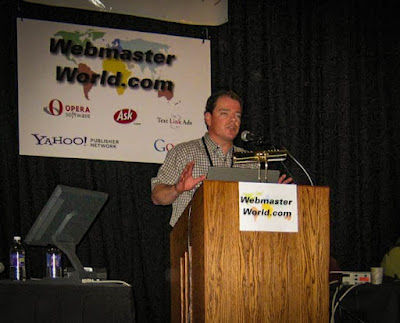
Webmaster World Super Session with Brett Tabke
Joe Laratro, Brett Tabke, Dana Todd, Glenn Alsup (Pubcon Keynote) 2006

Glenn Alsup speak at Webmaster World super session in Las Vegas
Glenn Alsup Pubcon Super Session 2006


Monday, March 01, 2021

Performing Arts Awareness Case Study

Jeremy Bullmore once said "Brands are created like birds create nests".  Logo for the Performing Arts Project organization

OBJECTIVE: Provide support for the creative efforts of our employees through the Performing Arts Project.

BACKGROUND: Viewmark is primarily a web design firm, but there always seems to be someone involved in some sort of extracurricular performing arts project around Denver. We believe that by helping our employees get visibility for their creative endeavors, we help them, our company, and the Denver community.

CHALLENGE: Create an effective online brand awareness playbook for the Performing Arts Project with an emphasis on providing the Denver community and our employees with a promotional avenue for their works.

SOLUTION: The PAP Internet Implementation Strategy for Performing Arts Professionals. A blueprint that utilizes Viewmark's expertise and fundamental principles of marketing, methods & measurement. It includes guidelines for websites and social media platforms like Facebook, Instagram, Twitter, Blogger, YouTube, Spotify and SoundCloud, as well as powerful procedures and analytics for participants to get the most out of the World Wide Web.

RESULTS:: Over the the last few years, the Performing Arts Project has seen an increase in visitor traffic to their website by several orders of magnitude. At the same time, Viewmark employees have a conduit for their creative passions and a strong sense of company loyalty.

Thursday, November 01, 2018

Hosting Milestone with AWS

We've maintained a rack of servers at Viawest (now Flexential) and formerly RMI (Rocky Mountain Internet) for 25 years. So it was quite nostalgic to breakdown our cabinet and move all our servers to storage and recycling. Over the last few months we've moved all our customers to the AWS platform. We even have a physical server in Frankfurt for our German customers. We have no regrets with Viawest, they were a good company, but the Amazon cloud was just a better fit for us moving forward.

Sverre Froyen at Viewmark rack space in Downtown Denver


Monday, May 21, 2018

With international SEO, a little goes a long way.

I have been fortunate to have traveled internationally rather extensively in my life. Early in my career I worked for a very small company that was acquired by a very large one. At the time, there was no such thing as video conferencing or the internet and we (the product marketing staff) were asked to visit a lot of different areas in the world to discuss 3D modeling technologies.
It’s ironic because the intensive traveling actually inspired me to start Viewmark. It was just a coincidence that new digital delivery platforms emerged, like CDs and the internet, that helped solve the intrinsic burdens associated with global product marketing. In essence, the new digital communication mechanisms allowed anyone to “have their cake and eat it too” by making it easier to sustain professional relationships around the globe without sacrificing significant time with family and friends.
Still, I can tell you from personal experience that there can be a lot of value in immersing yourself in a foreign country. Any American who has worked in Europe for an extended period of time will tell you that making an effort to speak the language of the country you are in goes a long way, but I readily admit that many of the responses to my attempts came back in English.
This reminded me of an experience I had in Sweden many years ago. It was in the late 80s and I was on one of those whirlwind marketing tours of Europe. I arrived in Stockholm after a long week on the road and decided to take a quick swim. The solarium was on the top floor of the hotel and when I entered I found that everyone was swimming naked. This is not commonplace in the States, but I said to myself, “When in Rome do as the Romans do”. After taking a short swim, I settled near the entrance, then several Americans walked in. Stunned with my appearance, they ask me, in English, if there was a sauna in the area. All I remember was responding with the only words I knew at that moment “Krona, Krona, Krona”.
In some ways international search works the same way. We have found that regional search engines like, Baidu, Naver, Yandex, etc. favor results for web pages where the titles and descriptions can be easily deciphered in the native language of the search engine and the major search engines have country specific sites where the results focus on links that are written in the country’s main language.
There are published reports that show the US percentage of global search traffic at 22% and if we add ~11% for countries around the globe that use English as their first language (UK, Australia, Canada, etc.), we can surmise that only one third of the world uses English when searching on the internet. Note: This is not to say that only one third of internet users will read English content. We feel this is significantly higher.
When a user arrives on your web site you can easily detect their language preference. Translation firms use spreadsheets or APIs to integrate content into their systems for localization and the costs for doing so are relatively low. At the same time, content management systems give you the ability to seamlessly provide the localized content on your web site.
International SEO is not one size fits all, but a little can go a long way! We have seen double-digit percentage increases in a company’s overall search volume by simply localizing page titles, meta descriptions and message bundles. The question to ask is: How global is your company and how well are you prepared to leverage the international search opportunities that are currently available?

Monday, January 22, 2018

VIP – Are you part of the link paparazzi?

It can be fun to draw analogies between the real world and cyberspace. For most people, the acronym VIP means “Very Important Person”. The media, and especially the tabloids, focus a lot of time and effort on following their every move. We all seem to get in on the act; for example, when someone knows a VIP there always seems to be a tendency to name-drop them whenever possible.
In cyberspace, I think of VIP as “Very Important Page” and the analogy to a very important person can be made in an eerily similar way, but keep in mind, search engines don’t understand human traits like infatuation. Traditional advertising concepts like “celebrity sponsorship” are not familiar to search engines and don’t really work very well.
I’m glad search engines don’t seem to get “star struck” like humans and try to concentrate on web pages from topic authorities instead of the celebrity sites. It makes the search engine optimization (SEO) process a little bit more predictable. However, many web site owners and search engine marketing (SEM) firms still seek out web pages with high page rank (PR) in an attempt to get a link placed to their web site from them.
This reminded me of a time in my life when I was required to travel coast-to-coast a few times a month on business because our New York 3D graphics firm had been acquired by an engineering software company in Los Angeles. Well, I quickly became an American Airlines Advantage Gold Member and was upgraded to first class on just about every flight I took. As a result, I flew with the likes of Ella Fitzgerald, Keith Richards, Whitney Houston, Andy Williams, and Frank Gifford to name a few.
My colleagues were all excited about it since they got to hear a lot of interesting stories about the celebrities, but for me it was just too much time away from family and friends. Interestingly, search engines would have probably considered my Hollywood anecdotes valuable information if my business was celebrity gossip, but they certainly would not have indexed them in relation to engineering software design.
There are many instances where a link from a specific type of web site can quickly move your rankings higher in the major search engines, Sites like Wikipedia, Academic and Professional Associations deliver much higher value than any celebrity site ever could. Search engines pay very close attention to how sites link to you and how you link to them.
So this brings me back to the VIP analogy. Of course it is important to have links from sites with high PR value, but I believe it is more important to concentrate on links that are from authority web sites from within your vertical industry or community. Soliciting a link just because it is located on a web site with a high PR value is like grabbing a camera, jumping on a motorcycle and joining the link paparazzi.

Monday, September 11, 2017

One picture is worth a thousand words, but a video subtitle is worth a thousand pictures.

Many years ago I worked for MAGI (Mathematical Applications Group, Inc) in Elmsford, NY. The company was a pioneer in computer generated imagery and 3D modeling technology. In 1966 they started developing software based on the concept of tracing radiation from its source to its surroundings. Eventually, the software was adapted for use in computer generated imaging by tracing light instead of radiation, making it one of the first systems to implement the concept of ray tracing.
The software was a solids modeling system, in that the geometry was a series of solid primitives (boxes, cylinders, extrusions, etc.) along with combinatorial (Boolean) operations. The combination of the solids modeling and ray tracing made it a powerful system for generating high quality images like those seen in the movie “Tron”. The graphics and engineering application side of MAGI, called MAGI/SynthaVision was started in 1972 and finally sold to Lockheed in 1985 to be integrated with CADAM.
At the time, CADAM was one of the most widely used CAD/CAM systems on the planet, but considered by most to be just a computer aided drafting system. I remember traveling around the world speaking on the subject of solids modeling. I often used the expression “if a picture is worth a thousand words then a solids model is worth a thousand pictures” since we could make an infinite number of pictures from a single 3D model.
I did a little research on the saying and found that Fred R. Barnard originally created it when he coined the phrase “One look is worth a thousand words.” Printers’ Ink, 8 December 1921, p. 96. He changed it to “One picture is worth a thousand words” in Printers’ Ink, 10 March 1927, p. 114, and called it “a Chinese proverb, so that people would take it seriously. It was immediately credited to Confucius.
This got me thinking about how search engines have a hard time building context from web videos. Unfortunately, spiders can’t watch a web video and extract the relevant information like humans can. Metadata can provide an overview, but is fairly limited in size. Well, this lead me to the video subtitle and the possibility of using an XML document to feed the subtitle to the video, as well as the search engine.
There are several methods for identifying spiders visiting your website. Once you’ve identified your visitor as a spider crawling for keywords and phases, you can replace the video on the page with the exact “word-for-word” account contained in your video subtitles. Clearly, you would NOT want to abuse this technique since search engines have been known to verify user agent delivery implementations and there are a variety of tools to view your website as the search engines do to validate your results.
This method seems to be particularly powerful for localized content since video subtitles are commonplace in foreign countries, but you’ll want to translate your page title and Meta description too. The cost to translate a video script usually comes out to be somewhere between $0.25 and $0.35 per word so providing the context of your video in multiple languages is very reasonable today.
So this brings me back to the old saying “One picture is worth a thousand words”. I wondered if Mr. Barnard were alive today if he would agree with me to reprint it for Internet users as “One picture is worth a thousand words, but a video subtitle is worth a thousand pictures”.

Wednesday, March 08, 2017

I said “You look fat in those pants”

Authoring content can be a labor of love or a laborious chore. Few people are gifted with the talent of successfully communicating their most refined ideas and perspectives the first time around. Have you ever wished you had the opportunity to respond to someone in a different way after the fact? Have you ever thought of something else to include in a correspondence after hitting the send button?
On the surface, there are some cases where modifying predated content makes sense; for example, let’s say you move your office, wouldn’t it be convenient to automatically replace your latest contact information in past eMail correspondences? Branded eMail application have “dynamic” content features so text in your eMail can actually be changed at a later date. This got me thinking and I have to admit that I have some reservations about possible abuse.
The overall topic reminded me of a friend I had when I was single. Let’s just say he wasn’t the most politically correct individual on the planet. Back then, going out on Saturday night to meet new friends sometimes included dancing; unfortunately, neither of us were very handsome and it was always intimidating to make the first move.
We would blurt out something original like “Do you want to dance?” and I’d say 9 times out of 10 the response would be an apologetic “not really” or “not right now”. Well, in the event that this happened, he later told me that it helped his pride to say “I said you look fat in those pants”. I’m guessing he had some sort of inferiority complex, but he would probably explain it as “getting the last laugh”.
Most of the time, web site content is published in a well-defined manner. Many content management systems archive revisions through workflow processes and applications like Wikis provide a good history of content modifications. However, with the proliferation of authoring tools that don’t track and/or timestamp changes, I’m afraid the practice of altering predated content goes somewhat unnoticed.
What people say and when they say it (content and publishing) cannot be considered subjective. Next generation web applications can address this issue with the widespread acceptance of emerging metadata standards like Dublincore. Now, this brings me back to my friend and his callous remarks, I later told him that consoling his victims about his insensitivity and lack of honesty landed me on the dance floor on several occasions.

Friday, August 19, 2016

Does your dog bite?

Consolidating analytic applications into a centralized corporate metrics initiative can make anyone feel “damned if you do, damned if you don’t”. Most organizations start the journey with an evaluation of the applications being utilized in the corporation and concentrate on a laundry list of features and requirements. The process generally consists of scoring each application’s strengths and weaknesses and when the process is complete, a winner is selected and the implementation begins.
Unfortunately, catering to the metrics needs of a diverse set of individuals and divisional requirements can be a challenge for any single reporting mechanism. Many metrics initiatives actually fail because the personnel they are intended to help can’t figure out how to get the data they need to make their business decisions from. Interestingly, the needs are usually a specific set of performance results not easily aligned with the corporation’s laundry list of application features.
The other night I was watching an old Peter Sellers movie and couldn’t help drawing an analogy. Clouseau was in the lobby of a hotel when a lady with a dog approached. He kneels down to pet the dog and politely asks, “Does your dog bite?”. The lady softly replies, “No, my dog doesn’t bite”. Suddenly, the dog digs into Clouseau’s hand and he quickly backs off. He exclaims, “I thought you said your dog doesn’t bite”, to which the lady explains, “This is not my dog”.
As I watched the scene it reminded me of how important it is to ask the right question and how easy it is to misinterpret the answer. Over the years, we have been involved with many corporate analytic implementations and there are two major headlines that have emerged for me. One: everyone wants something different, and two: the process has to be clear and simple for everyone.
Clearly, consolidating corporate metrics into a single application can remove ambiguities, streamline processes and reduce overall costs. Ironically, as the number of users increase, so does the inherent complexities of fulfilling the unique needs of each user in a single “one size fits all” application.
To institutionalize analytics and business intelligence applications more effort needs to be focused on the process of how individuals receive the information they need, instead of the actual features and usage of the metrics application. Today, most major metrics applications can answer the majority of questions we need to know, even some that are free. The challenge is to provide each individual with their unique answers in a consumable way for all.

Tuesday, April 12, 2016

Search, Branding and the Bottom Line

A relatively new phenomenon for every company’s marketing arsenal can be found with search engines. In most cases, people think of search as a way to take advantage of a working transactional model. After all, it is hardly rocket science to build predictive models from conversion analysis of searchers visiting your web site. Most companies can tell you, with varying degrees of certainty, how much additional revenue should be generated from any increased level of search traffic.
It is even possible to ascertain the average number of searches across the major search engines for any specific keyword or phrase in a given month. Less common, but perhaps more important, is to be prepared for increased searches from other marketing vehicles driving search. It would truly be a shame to have competitors capitalizing on your other campaign drivers through search. In practice, this could be handled by dayparting increased P4P spending for the days and hours following the ad broadcasts.
The reason this doesn’t work so well in reverse is that search is mostly a “pull” mechanism for your clients. Today, television, radio, and direct mail are mostly “push” mechanisms for you. Considering campaign timelines, it is hard to imagine a pull mechanism like search driving a push mechanism like television.
A less quantifiable use of search is for branding purposes. Someone once said, “Brands are created like birds create nests”. In any given day you are exposed to numerous product advertisements, expert advise from family and friends, as well as, inquires you make using search engines. All these events makeup your perception of a specific brand.
Measuring the affect that search has on brand is challenging to say the least and some companies are more suited to utilize brand building techniques than others, but all companies can benefit by using search to better define their brand in one way or another.
It is safe to say that customers are not thinking about your products all of the time; however, during these times, there are numerous opportunities to present your company in subtle brand defining ways through search. A direct correlation between application content and transactions can be established using both quantitative and qualitative methods.

Wednesday, December 23, 2015

Parabolic skis and web widgets (aka gadgets)

Being from Colorado, I like to go skiing in the mountains at least a couple of times a year with the family. It feels like a responsibility and justification for living in a climate that can be cold for many months out of the year. It’s strange how, at the same time, I always notice that the skis and associated hardware have changed slightly. You know, the color and design of the skis or maybe the way the boots and bindings work. I’m usually intrigued enough to see if the change could improve my ability to ski or to enjoy the experience.
Skiing in Colorado typically starts at about the same time as Webmaster World’s annual conference in Las Vegas, which kicked off on November 11th at the convention center and ended with the traditional pubcon gathering at the Hofbrauhaus 4 days later. I always enjoy catching up with friends and getting the latest information on the search engines and web development trends. If you have a web site and you want to promote it, this is the one conference no one should miss.
This year I noticed that every session had rows of tables for participants to place their laptops on, unlike past years, when we only had chairs and took session notes manually. I observed people multi-tasking from the rear of the conference rooms. IMs, eMails and tweets were flying back and forth on a variety of devices. I even noticed someone answering customer support messages from their web site using Live Person right in the middle of a session.
It made me wonder if I was missing something. I remembered my old skis and how they had lasted for so many years. Could there be similarities with web development? It seems like a bizarre correlation, but underlying web technologies are moving ahead at a relatively slow pace. We’re just bombarded with a lot of extraneous items that make it feel like things are moving faster than they truly are. The number of options and tasks that we have to monitor has surely increased, but underlying changes in technology happen slowly.
I guess what I’m trying to do is draw a correlation from my latest ski adventure to my latest web conference; after all, it is that time of year and I recently purchased a new pair of parabolic shape skis. Besides the significant difference in my ability to carve up the mountain slopes, I noticed that nearly everyone is now using the relatively new technology.
So what do parabolic skis have to do with this years Webmaster World conference sessions? During the widget (aka gadget) session, one of the presenters showed a slide that overlayed web usage and web traffic to corporate sites and social networks. It showed how valuable it can be to find ways to embrace Web 2.0 technologies and provide your content on these networks (and devices) in the future.
It seems like only a few years ago that we were introduced to web widgets, even though they have been around for more than a decade. I believe that is about the same time that Elan introduced parabolic skis. After attending the gadget session at Webmaster World this year we built and served-up several custom gadgets. Somehow, it reminded me of carving up the back bowl at Copper on my new skis…piece of cake!

Saturday, February 14, 2015

Marketing is from Venus and IT is from Mars

Behind the scenes of any good web site implementation is a solid marriage between Marketing and IT. There’s really no playbook here, every company seems to have a little different process for how the two departments should work together and it’s really interesting how the interactions between the two have a lot of similarities to a real world marriage.
Let’s not kid ourselves; every marriage has issues, the ones that last for a long time just figure out how to make the best out of the ups and downs. The ones that don’t, move on and start the process all over again. I actually got married when I was 19 and divorced at 24, we were just too young. I remarried when I was 40 and we are still going strong. Now my parents, they have been married for over fifty years.
I think the things that make a good marriage can be found in similar beliefs, goals and a genuine friendship for one another. Some people say that couples that last a long time have a lot in common, others say that opposites attract; in either case, there needs to be mutual respect from both parties in the relationship.
In business, vendors often work with only one side of their client’s house and it sometimes feels like there is a “don’t ask don’t tell” policy in affect. Many companies, as odd as it might sound, actually utilize vendor services because they can remain “under the radar” for some period of time.
The Marketing folks think that IT doesn’t understand their business goals and the IT folks think that Marketing doesn’t have any long-term technology vision. Well, I can tell you from personal experience that this can put the vendor in a rather precarious position.
In a real world marriage, this sort of extracurricular relationship seems to begin in a similar way. You can easily imagine someone confiding with a friend on how their spouse doesn’t “understand their needs”. This innocent discussion could progress into a relationship when the acquaintance tries to help out their friend. Eventually, the outside faction is exposed and often made out to be a rogue charlatan.
To avoid this sort of situation in business, I guess the vendor could insist that their activities be fully disclosed to all other parties in their client’s company, but can this really up to the vendor? In many cases, to win the business the vendor needs to present assets not currently available from inside the prospective company and that might directly compete with other parties involved.
This brings me back to the marriage metaphor. My observation is that good chemistry between Marketing and IT is rare and the exception, not the rule; afterall, the relationship isn’t built upon the same underlying principles as a real world marriage. Still, it may be said that “Marketing is from Venus and IT is from Mars” or vice versa of course.
Obviously, it is important for Marketing and IT to have clear communication paths, but sometimes the biggest problems are solved by the most minute details. This morning I got up and ask my wife to be my Valentine and I can tell you that even with all life’s ups-and-downs this small gesture confirmed that we are in our marriage together.

Thursday, May 15, 2014

Subdomains – Do you have a “One Page Wonder”?

When we start the process of building a web site the URL nomenclature always seems to come up. Sometimes we research and buy a new domain name, other times we create a new directory under an existing domain name and then there are times when we use a subdomain.
Clearly, your site’s URL strategy will have a major affect on how your web pages appear in the search engines results pages (SERPS). Here’s an example; for a long time we used subdomains when implementing blogs for our clients. Later, we changed our strategy to use the domain hierarchy because we found that the latter was more effective at increasing the page rank for the root domain through the natural propagation of inbound links to the blog (as a directory).
There are cases where we just can’t use the company’s domain name; server access, backend software, content updates, etc. and sometimes it’s just easier to build the web site on a subdomain located outside the company’s normal IT infrastructure. To accomplish this, all you need to do is to get a CNAME (subdomain) on the company’s DNS server and point it to an IP address located on an alternate network.
Recently, there has been a lot of talk about subdomains being treated as directories by the major search engines. My guess is that the search engines are trying to make sure that subdomains are providing unique content and that they are not being exploited for higher SERP rankings. This got me thinking about how search engines evaluate web sites in the same way as we critique our favorite bands.
Like many people, I have been actively listening to music for most of my life and in that time I can remember many songs that I would now say fall into the category of “One Hit Wonders”. Every generation has them, songs like: “The Macarena” by Los Del Rio (1996),  ”Tainted Love” by Soft Cell (1982) and “Kung Fu Fighting” by Carl Douglas (1974) all come to mind.
Wikipedia characterizes “One Hit Wonders” as short-lived novelty songs deliberately written to cash in on a fad. Early on, I bought into the commercialization of music and actually bought several albums from some of these bands. I think I may still have an Iron Butterfly album in the attic somewhere. I guess we are all young and naïve at some point in our lives.
So how does this relate to URL nomenclature? Well, if you want to get traffic from organic search to a web site and you are using a subdomain, a good rule of thumb is to make sure that the content is unique in nature and there is an adequate level of substantive content. Think of the bands that have passed the test of time, they typically have their own style and many memorable songs accredited to them. Search engine algorithms are like web site critics, in that they attempt to identify valid web sites in a similar way to how we evaluate our favorite bands and their music over time.
Now this isn’t to say that subdomains can’t be used as single pages. Just like a “One Hit Wonder” can sound really good and make an artist and their record company a great deal of money, these “One Page Wonders” can be very visual and achieve their business goals; however, when planning these types of web sites don’t expect any search engines to ever rank them very high and consider the fact that you’ll need to use paid advertising to promote them.

Sunday, October 14, 2012

Who you know, what they say and reciprocality

Search engine crawls are kind of like meeting your cousin periodically. When you meet there is always a tendency to exaggerate your recent accomplishments in an attempt to impress them. Everyone likes positive information to propagate about them throughout their family. Unfortunately, search engines (like cousins) aren’t easily fooled and embellishments can sometimes work against you.
You see, search engines (like cousins) have the ability to quickly verify your claims and tell you “who says what” through their links and contacts. This makes the whole experience a bit uncomfortable since your comments are not necessarily what you say you know, but whom you know and what they say you know.
This reminded me of a story someone told me about a famous celebrity they met and how the encounter changed their perception within their family, ultimately making them a legend. It was a monthly reunion of sorts; the individual was having dinner with his cousin. The conversation consisted of repetitive anecdotes on recent events when my friend excused himself for a quick biology break.
While in the restroom, my friend ran into a famous celebrity. He pleaded his case and asked the celebrity if they would mind acting like they knew him and saying something nice to his cousin. The celebrity thought it might be fun and reluctantly agreed. My friend went back to his table and continued to converse with his cousin, suddenly her eyes got as big as oranges when she recognized the celebrity approaching.
The celebrity put his hand on my friend’s shoulder and said “How are you, I haven’t seen you in a long time, is this the wonderful cousin you’re always talking about?” My friend turned to the celebrity and abruptly told them “Get lost, can’t you see I’m in the middle of something!” Now at first glance this might seem incredibly rude, but in terms of impressing his cousin it was remarkable.
This brings me back to search engines and how they seem to work in a similar way. You see, a link and recommendation from a highly ranked “celebrity” type site is more valuable when the link is not reciprocal. Of course, now my friend has become a legend, if not in his own mind, ours.

Monday, June 25, 2012

Tournament Draws and Search Linking Algorithms

This year I turn 55! Quite a milestone when you think about it. I can tell you a number of things go through your mind when this event occurs and I’m guessing everyone goes through some sort of “right of passage“. Having been a tennis player most of my life, I decided that 55 was my opportunity to join the 55-and-over tennis tournament circuit. I imagined filling my trophy case with hardware from my triumphs.
In my first tournament, the draw had me play a first round match late in the evening, followed with a meeting with the number 2 seed early the next morning. This didn’t seem fair, but as a newcomer I didn’t feel it was my place to complain. Well, the good news was that I won my first match, but the bad news was that I resembled a pretzel the next morning. Needless to say, I went down in defeat, but on my drive home I had a bit of an epiphany on tournament draws and search linking algorithms.
What I realized was that search algorithms actually use a similar process. You see, as an unknown, the tennis tournament directors could not credibly seed me; similarly, search engines don’t rank newly found URLs very high in their listings. Now, if I would have won my match against the number 2 seed, I’m sure the Colorado Tennis Association would gladly seed me in the next tournament. Likewise, search engines start recognizing URLs when other prominent (seeded) sites point to you.
The lesson here is that “talk is cheap” in both sports and web search. I plan to continue my quest for Colorado tennis stardom, but in the meantime we’ll plan to get as many valuable links (from seeded websites) to Viewmark as possible.

Sunday, June 26, 2011

With international SEO, a little goes a long way

I have been fortunate to have traveled internationally rather extensively in my life. Early in my career I worked for a very small company that was acquired by a very large one. At the time, there was no such thing as video conferencing or the internet and we (the product marketing staff) were asked to visit a lot of different areas in the world to discuss 3D modeling technologies.
It’s ironic because the intensive traveling actually inspired me to start Viewmark. It was just a coincidence that new digital delivery platforms emerged, like CDs and the internet, that helped solve the intrinsic burdens associated with global product marketing. In essence, the new digital communication mechanisms allowed anyone to “have their cake and eat it too” by making it easier to sustain professional relationships around the globe without sacrificing significant time with family and friends.
Still, I can tell you from personal experience that there can be a lot of value in immersing yourself in a foreign country. Any American who has worked in Europe for an extended period of time will tell you that making an effort to speak the language of the country you are in goes a long way, but I readily admit that many of the responses to my attempts came back in English.
This reminded me of an experience I had in Sweden many years ago. It was in the late 80s and I was on one of those whirlwind marketing tours of Europe. I arrived in Stockholm after a long week on the road and decided to take a quick swim. The solarium was on the top floor of the hotel and when I entered I found that everyone was swimming naked. This is not commonplace in the States, but I said to myself, “When in Rome do as the Romans do”. After taking a short swim, I settled near the entrance, then several Americans walked in. Stunned with my appearance, they ask me, in English, if there was a sauna in the area. All I remember was responding with the only words I knew at that moment “Krona, Krona, Krona”.
In some ways international search works the same way. We have found that regional search engines like, Baidu, Naver, Yandex, etc. favor results for web pages where the titles and descriptions can be easily deciphered in the native language of the search engine and the major search engines have country specific sites where the results focus on links that are written in the country’s main language.
There are published reports that show the US percentage of global search traffic at 22% and if we add ~11% for countries around the globe that use English as their first language (UK, Australia, Canada, etc.), we can surmise that only one third of the world uses English when searching on the internet. Note: This is not to say that only one third of internet users will read English content. We feel this is significantly higher.
When a user arrives on your web site you can easily detect their language preference. Translation firms use spreadsheets or APIs to integrate content into their systems for localization and the costs for doing so are relatively low. At the same time, content management systems give you the ability to seamlessly provide the localized content on your web site.
International SEO is not one size fits all, but a little can go a long way! We have seen double-digit percentage increases in a company’s overall search volume by simply localizing page titles, meta descriptions and message bundles. The question to ask is: How global is your company and how well are you prepared to leverage the international search opportunities that are currently available?

Monday, May 03, 2010

Web Site: Is that one word or two?

For years I’ve been going back and forth on whether or not to use one word or two when spelling web site. Often, I use Google’s search box as a spell checker and as the deciding factor in such cases. Well, when you type in “web site” as a two word phrase you get 1.8B matches, the one word spelling “website” gets 1.3B matches. So, it looks like the general population uses “web site” as two words more often.
I guess I’ve always gravitated to using one word since it just looks cleaner and feels right to me, but the debate got me thinking of other words that are sometimes used in the same way and I found that in some cases the meanings can be entirely different. Clearly, whether you use web site or website your reader knows what you are referring to.
This topic reminded me of a joke. It is somewhat crude, but does bring out some of the nuisances of English and I’m not sure it can be translated to other languages. Be careful telling it at the water cooler though, I believe there was a case where an employer fired an individual for discussing the Seinfeld episode about Jerry only knowing his girl friend’s name rhymed with a part of the female anatomy.
So here it is: One night, a lonely gentleman was having a wonderful conversation with a member of the opposite sex. They were really having a great time and both felt very comfortable with each other. A bit premature, the man asks her if she would consider marrying him. Not knowing him very well, she let him know that there were several things that were very important to her.
First, she let him know that she really liked cars. He was very happy to tell her that he did too and that he had many new and collector type cars. She was delighted with his answer and then told him that she had always been fond of real estate too. He mentioned that he had numerous houses in several different regions of the world and he would be happy to have her tour them.
She wondered if he could be the one since no one else had ever answered those questions to her satisfaction. She was a bit shy and had a hard time asking her last question. “So, what about sex?” she asked. He replied, “infrequently”. Scratching her head, she then asks him to clarify, “Is that one word or two?”
Fortunately, we no longer need to worry about the correct usage of the term “website” since the AP Stylebook recently clarified their position to use one word versus two. This might not mean much if you’re not writing a tech blog, but the AP stylebook is the standard for all things grammar and punctuation in the news world.

Sunday, March 08, 2009

It’s the same old wine in a brand new bottle

I’d never given much thought to the expression about seeing a glass as half full or half empty, but the other night, as I was enjoying a glass of wine, I couldn’t help observing that it appeared to be at that critical point in time.
My first inclination was to grab the bottle and fill it to the top again since this would indicate that I saw the glass as half full and by most accounts this is considered the more positive approach. Then it occurred to me that perhaps the expression might mean that by seeing the glass as half empty I should moderate my consumption accordingly. If I saw the glass as half full then I would continuously consume and probably wouldn’t enjoy it as much.
In these tough times ad spends are being closely monitored and it seems like understanding that the glass is not bottomless is important. When you see the glass as half empty you tend to savor each sip more and in the advertising world that equates to utilizing your advertising dollars as effectively as possible.
On the other side of the coin, growing up my mom used to always say “Today is the first day of the rest of your life” and this expression has always been a mantra for me. Could you imagine your advertising firm saying “Today is the last day since the beginning of my life”.
In either case, knowing what “full” actually means indicates that your expectations have already been set. I like to think of it as just a glass of wine that comes from a bottle that comes from a barrel that comes from a vineyard.
So whether the glass is half full or half empty, enjoy what you have and try to facilitate a way to maximize it’s full potential. After all it’s the same old wine it’s just in a different bottle.